
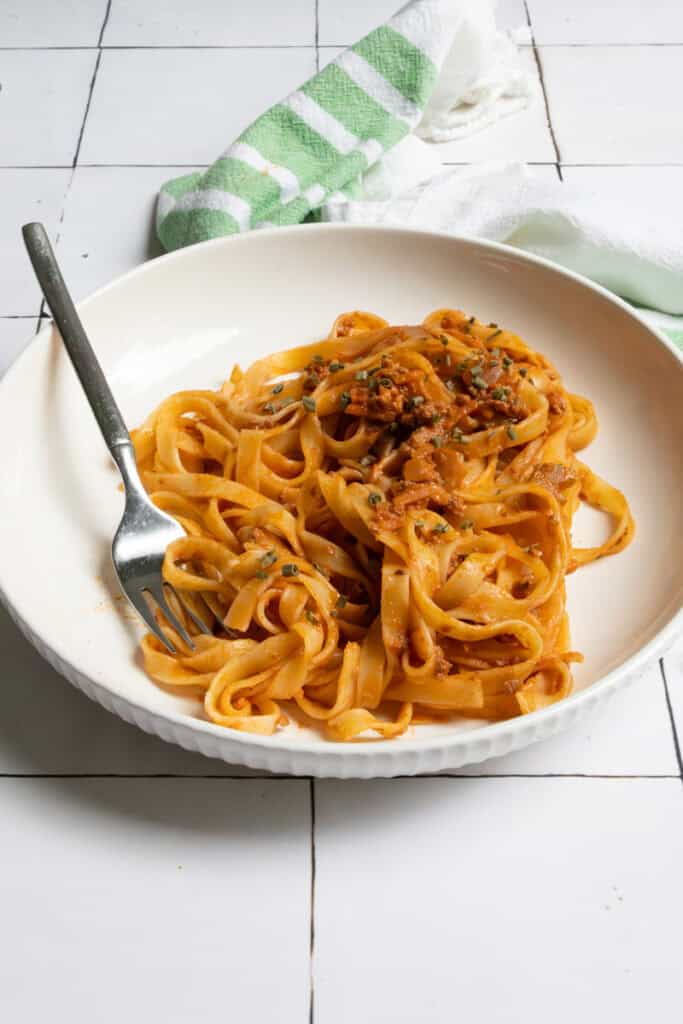
This turkey Bolognese is made with ground turkey and turkey sausage, and is a variation on the classic Italian Bolognese sauce.
Last summer while eating (and hiking) my way along the epic the Tour du Mont Blanc, we ate some of the most incredible pasta I've ever eaten in my life.
I've been on a pasta kick ever since.
Typically, I've leaned towards vegetarian pasta dishes (like classic marinara and mushroom alfredo) or seafood-heavy pasta dishes (like seafood fra diavolo and pasta con le sarde).
However, as we've hosted friends who are meat lovers, I've found other recipes slipping into my routine, such as this turkey Bolognese.
What Is Traditional Bolognese?
Traditional Bolognese is a slow-cooked, meat-heavy pasta sauce that originates from the Bologna region in Italy.
There are lots of variations of the sauce, but in general, it includes pork (sometimes calling for pork shoulder or pork belly) and beef (sometimes a mixture of ground beef and veal).
If you'd like to try making the classic version, I recommend the Ragu Bolognese recipe in the book Old World Italian or this Serious Eats version, both of which I referenced when making this turkey version.
Swapping Turkey for Bolognese Meat without Losing Flavor
For this turkey Bolognese, we're swapping out the pork and beef for poultry. There is no doubt about it: the original calls for some meats with quite distinctive flavor profiles and textures.
That said, after trying lots and lots of variations of this recipe, I think this turkey version is delicious and I've been making it often.
Instead of the pork and beef, we're swapping ground turkey sausage and ground turkey meat. The sausage will add a little extra complexity and richness, but if you only have ground turkey on hand, I enjoy it that way also.
I've also tried swapping olive oil for duck fat, just to add another layer of flavor. Personally, I loved it with the duck fat, but it can be fairly pricey.
If you've recently roasted a duck, I recommend using the leftover duck fat for this recipe. Otherwise, buy duck fat if you'd like to splurge and make this extra delicious.
Can I Skip the Cream and Parmesan?
You can. And I often do, because I tend to run out of both items and forget to repurchase them right away.
That said, this sauce is absolutely more delicious with both added.
Can I Speed Up the Cook Time?
Sort of.
This isn't a quick recipe. It's best if you can simmer the sauce for at least an hour, although you can probably cheat a little bit if you're in a hurry.
That said, it freezes incredibly well! My recommendation is to make it on a day when you have the time, and then freeze or refrigerate the sauce for later.
When you're ready to serve, just heat up the (thawed) sauce, add the cream (if using) and cook the pasta. Your meal can be ready in about 20 minutes if you plan ahead.
What Kind of Pasta Should I Use?
Traditional Bolognese uses tagliatelle, a noodle that looks a whole lot like fettucine, but is slightly wider and thinner.
However, I often find tagliatelle a little difficult to locate where I live. I've found it (seasonally in winter) at Aldi, but rarely in other grocery stores near me. If you're looking for it, it's often (but not always) sold wrapped in nest-shapes. Tagliatelle is fairly easy to find online.
While it's not traditional, I also enjoy this sauce with fettuccine (a very similar noodle). Or you could break with tradition entirely and use a short-grain noodle that's good at grabbing sauces, such as rotini.
How to Make Turkey Bolognese
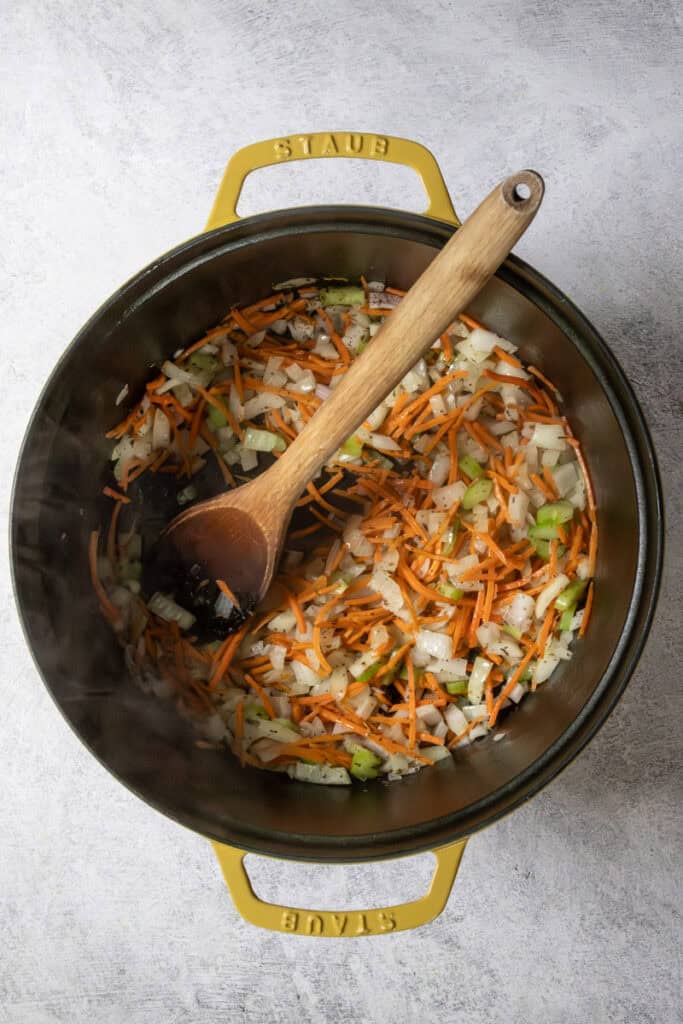
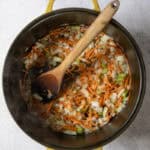
In a heavy pot, like a Dutch oven, heat oil and add carrot, celery, onion, herbs, and salt.
Cook until the veggies soften, which should only take a few minutes.
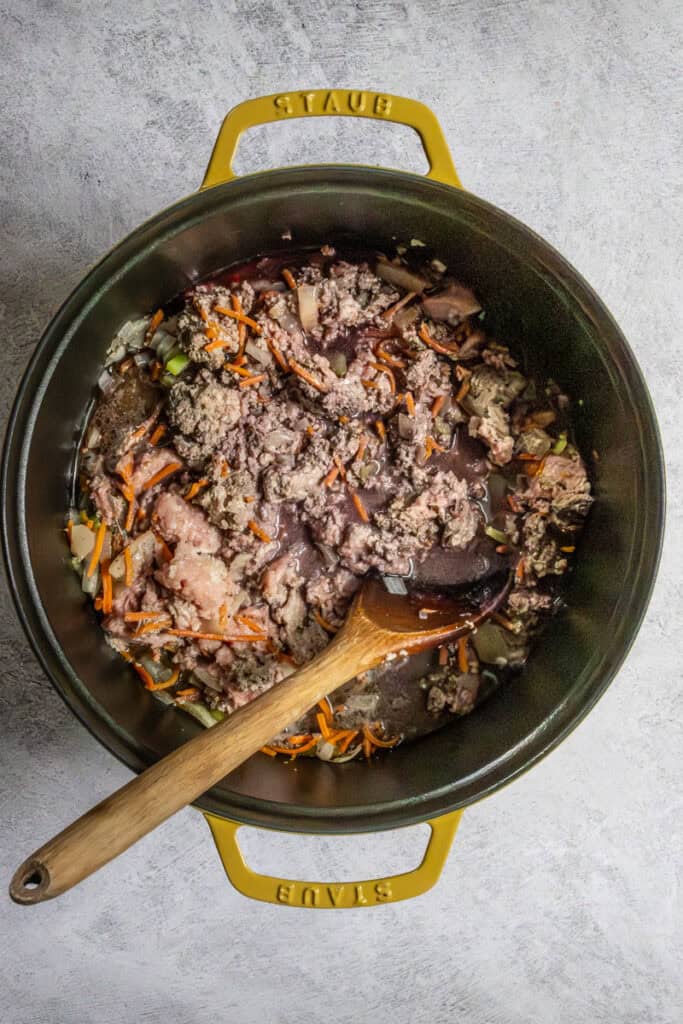
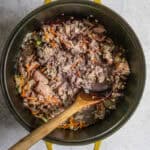
Next, add the ground turkey and turkey sausage and let them brown. Add the red wine, if you're using that, and let it simmer for a couple of minutes.
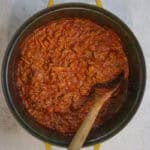
Now add the tomato puree, tomato paste, and broth. Simmer the mixture over low heat for at least an hour (longer if you have the time!), giving it an occasional stir.
If you're planning to store the sauce for later, this is the point at which you'd stop and freeze it.
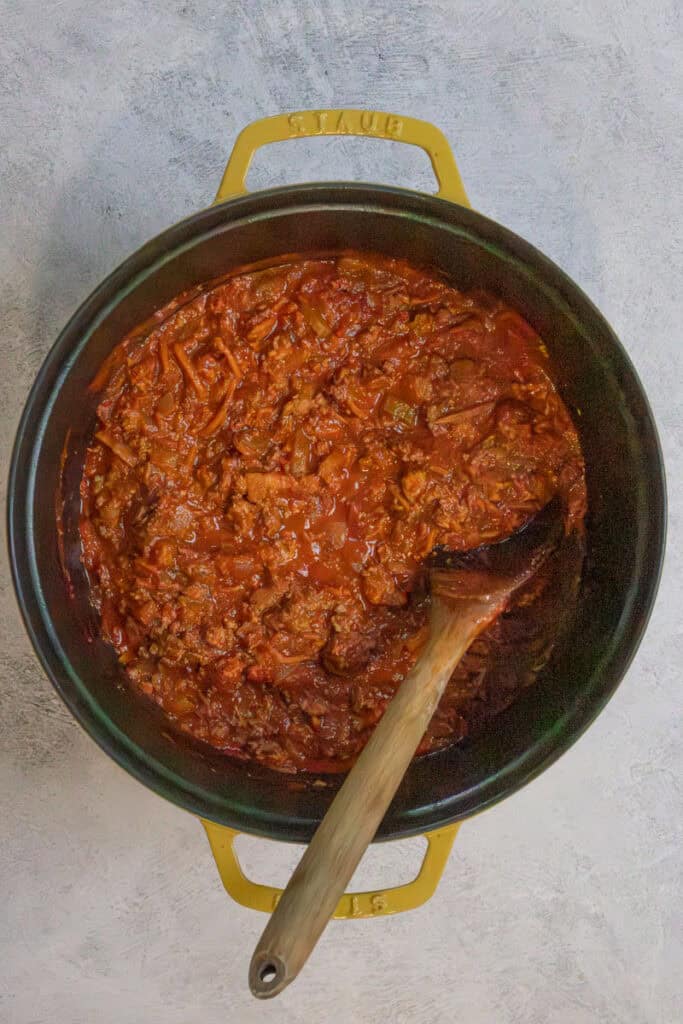
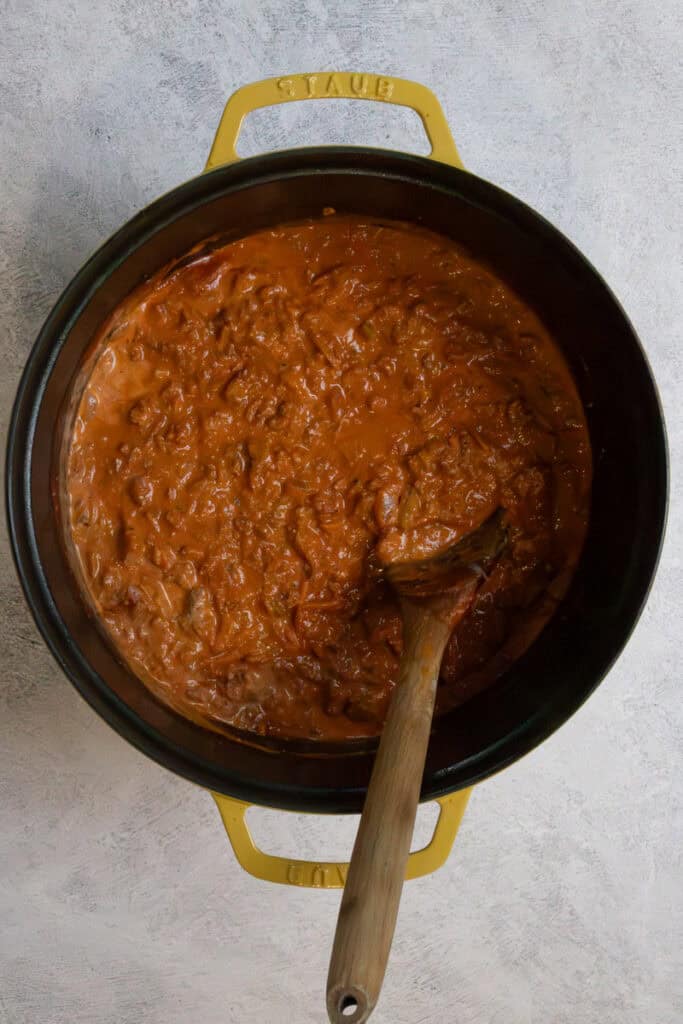
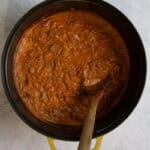
After it has simmered that length of time, add the cream. Let it stay on a low simmer while you prepare the pasta.
Add the tagliatelle (or pasta of your choice, using gluten-free if needed) to a large pot of salted boiling water and cook as directed on the package.
When the pasta is al dente, reserve about a cup of the pasta water and drain the rest.
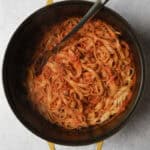
Toss the pasta into the sauce, adding a little of the pasta water if it needs more moisture.
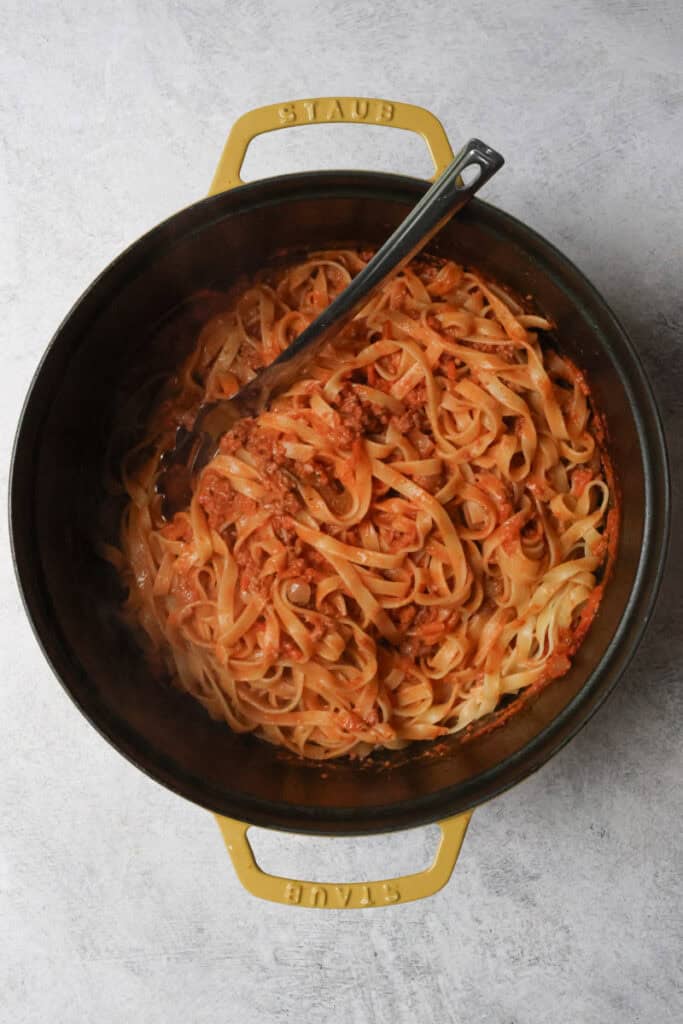
It's time to serve! Sprinkle a little Parmesan cheese on top, and enjoy.
Turkey Bolognese
Equipment
- large Dutch oven
Ingredients
- 2 tablespoons olive oil Or use duck fat
- 1 large carrot, shredded
- 1 onion, diced
- 1 celery stalk, diced
- 1 teaspoon Italian herb mixture
- ¼ teaspoon sea salt, plus more to taste
- 1 pound turkey sausage Or omit and use 2 pounds ground turkey
- 1 pound ground turkey I used a 93/7 lean ground turkey. If using extra-lean (99/1) turkey, add extra tablespoon oil.
- 1 cup dry red wine Optional
- 24 ounce jar tomato puree Or use 28-ounce can
- 4 tablespoons tomato paste
- 1 cup chicken broth Or use turkey broth
- ½ cup heavy cream Optional
- 1 pound tagliatelle Or use fettucine. I also like this sauce with a short-grain pasta such as rotini or penne.
Instructions
- Add the oil to a large heavy pot and heat on medium. When the oil begins to shimmer, add the carrot, onion, celery, herbs and ¼ teaspoon sea salt. Cook until veggies soften, about 5 minutes.
- Add the sausage and ground turkey, and cook until the meat begins to brown.If using, add the wine and simmer about 2 minutes.
- Add the tomato puree, tomato paste and broth. Reduce the heat to low and allow to simmer for about an hour, stirring occasionally.
- If using, add the cream and stir. Taste, seasoning with more salt if desired.Allow sauce to simmer over low heat while pasta cooks.
- Bring a large pot of salted water to a boil. Add pasta and cook according to package directions. When pasta is al dente, scoop out about 1 cup of pasta water into a measuring cup. Drain the pasta and toss directly into the pasta sauce, adding a ladle or two of pasta water if the sauce seems dry.Serve immediately, garnishing with Parmesan cheese if desired.
Notes
- Freezer: Stop after step 3 (after simmering the tomato sauce but before adding cream). Cool to room temperature and store in a freezer-safe container for up to up to 6 months. Thaw before using, reheat and add cream.
- Fridge: After step 4 (adding the cream), stop and allow the sauce to cool to room temperature. Store in the fridge for 3-4 days. Reheat before serving with freshly cooked pasta.


Leave a Comment: